
Why Does My Garage Door Reverse Immediately After Hitting the Floor?
If your garage door reaches the floor but immediately opens again, the opener may be traveling too far downward, detecting unexpected resistance, or reacting to a mechanical problem near the end of the closing cycle. Easy Garage Door Repair helps Houston homeowners diagnose garage doors that will not stay closed.
Quick Answer: Why Does My Garage Door Hit the Floor and Go Back Up?
One of the most common explanations is that the garage door opener thinks the door has encountered an obstruction. If its downward travel is set too far, the door reaches the floor while the opener continues trying to move downward. Resistance rises, the safety-reversal system reacts, and the garage door opens again.
Other possibilities include excessive resistance in the tracks, worn rollers, an unbalanced door, a compressed bottom seal, an uneven garage floor or an opener that needs its travel settings recalibrated. If the issue appears to originate at the opener, learn more about garage door opener repair in Houston .
Safety sensors can also cause a garage door to reverse. However, when the door physically reaches the floor before reopening, the travel setting or mechanical resistance near the bottom of the door's movement deserves particular attention.
What This Garage Door Symptom Usually Means
A garage door that closes completely and immediately rises again can be confusing because the opener appears to have completed the closing cycle. In reality, modern openers monitor movement and resistance as the door travels.
If resistance rises unexpectedly during the final part of travel, the opener may interpret that resistance as an obstruction and activate its safety-reversal function.
The problem may involve the opener, but the garage door itself also needs to be considered. Springs, rollers, tracks, hinges, cables, weather seals and door balance all affect how much effort the opener must use.
If your door has other closing symptoms, our guide covering a garage door that won't close explains additional problems that can prevent normal closing.
6 Common Reasons a Garage Door Reverses After Hitting the Floor
Close-Travel Limit Is Set Too Far
The opener may be programmed to move farther downward than the garage door physically needs to travel. Once the door reaches the floor, the motor continues pushing and detects increased resistance.
Door Binds Near the Bottom
Worn rollers, track alignment problems or damaged hardware may create extra resistance in the final few inches of the closing cycle.
Garage Door Is Poorly Balanced
The opener should guide a properly balanced garage door. A spring or balance problem can make the door much harder for the opener to move.
Bottom Seal or Floor Creates Resistance
A thick, damaged or folded weather seal—or an uneven garage floor— may create additional pressure when the garage door reaches the floor.
Travel or Force Calibration Is Incorrect
Some modern garage door openers electronically learn their travel positions. Incorrect calibration may cause normal floor contact to be interpreted as excessive resistance.
Safety Sensor or Control Problem
Photo-eye sensors normally cause reversal before the door reaches the floor, but alignment, wiring and control problems should still be checked when closing behavior is inconsistent.
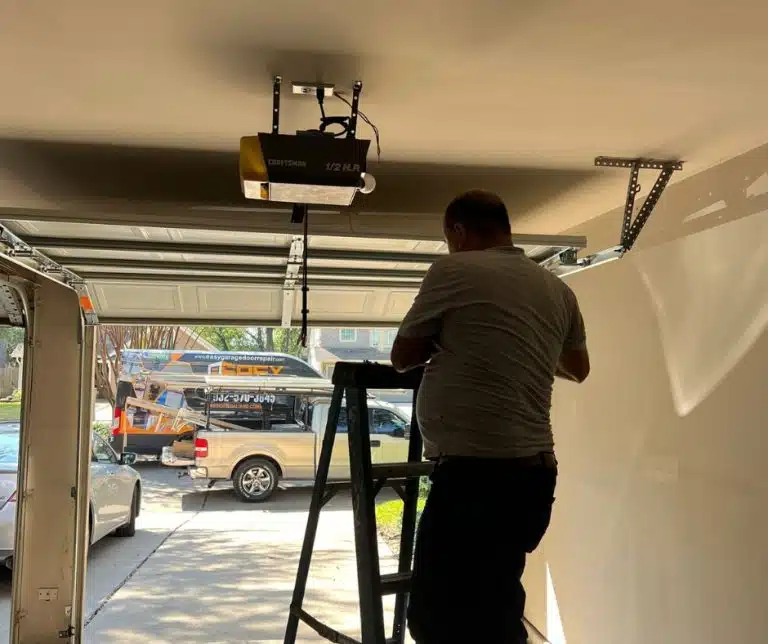
Why the Garage Door Close-Travel Limit Matters
A garage door opener needs to know where the fully open and fully closed positions are. Depending on the opener, those positions may be controlled mechanically or programmed electronically.
If downward travel is set too far, the opener may continue applying power after the garage door has already contacted the floor. The increase in resistance can trigger the safety reversal.
For homeowners experiencing this exact symptom, professional garage door opener troubleshooting can help determine whether the issue involves travel calibration, the opener itself or resistance elsewhere in the system.
Important Distinction
A garage door that reaches the floor and then immediately reverses is different from a garage door that reverses several inches above the floor. The first pattern can point toward travel or resistance issues, while the second often makes sensors or obstructions more important diagnostic clues.
Should You Increase the Closing Force?
Increasing opener force should not automatically be used to solve a reversal problem. If rollers, tracks, springs or another mechanical component are creating resistance, additional force may simply hide the underlying problem.
The safety-reversal feature is an important part of garage door opener operation. Homeowners can review U.S. Consumer Product Safety Commission guidance on non-reversing garage door openers for additional independent safety information.
Can Garage Door Safety Sensors Cause the Door to Reopen?
Yes. Garage door photo-eye sensors are usually mounted near the bottom of the tracks and create an invisible safety beam across the garage opening.
When that beam is interrupted while the garage door is closing, the opener normally stops and reverses.
If your sensor lights are blinking, misaligned or behaving inconsistently, see our garage door sensor alignment and replacement service for more information about photo-eye problems.
With a typical sensor problem, the garage door may reverse before reaching the floor. If the door consistently touches the floor first, the travel setting or mechanical resistance may deserve more attention.
Common Sensor Problems
- Misaligned photo-eye sensors
- Dirt or debris covering the sensor lens
- Loose sensor wiring
- Damaged wiring
- An object blocking the safety beam
- A loose sensor mounting bracket
- Intermittent alignment problems
Houston homeowners who want a deeper explanation of safety sensors, wiring and opener communication can also read our Houston garage door sensor safety guide .
Garage Door Opener Safety and Federal Guidance
Automatic residential garage door openers use entrapment-protection features intended to reduce the risk of a closing door trapping a person or object. That is why unexpected reversal should not simply be defeated by increasing force settings without understanding why the opener is reacting.
These external government resources are provided for independent safety information. They do not replace inspection of the individual garage door system when the door is operating abnormally.
Garage Door Reversal Symptoms and Possible Causes
| What You Notice | Possible Cause | Recommended Next Step | Urgency |
|---|---|---|---|
| Door hits the floor and immediately reopens | Down-travel limit or excessive resistance | Check travel calibration and door movement | Moderate |
| Door reverses before reaching the floor | Sensor obstruction, sensor alignment or binding | Check the opening and sensor area | Moderate |
| Door closes unevenly | Cable, spring, roller or track problem | Stop operation and request inspection | High |
| Door feels unusually heavy | Spring or balance problem | Avoid repeated opener operation | High |
| Door only reverses occasionally | Intermittent sensor, alignment or opener problem | Observe the pattern and request diagnosis | Moderate |
| Opener light flashes during reversal | Sensor or opener diagnostic condition | Inspect sensor indicators and opener diagnostics | Moderate |
What Can a Houston Homeowner Safely Check?
You do not need to disassemble the garage door to collect useful information. Several simple observations may help narrow down the cause.
Watch Where the Door Reverses
Determine whether it reverses before touching the floor, exactly when it contacts the floor or after pressing firmly against the floor.
Look for Obstructions
Check the floor, sensor area and visible tracks for obvious objects or debris.
Observe Door Movement
Look for shaking, jerking, uneven travel, scraping or one side moving differently from the other.
Garage Door Safety Warning
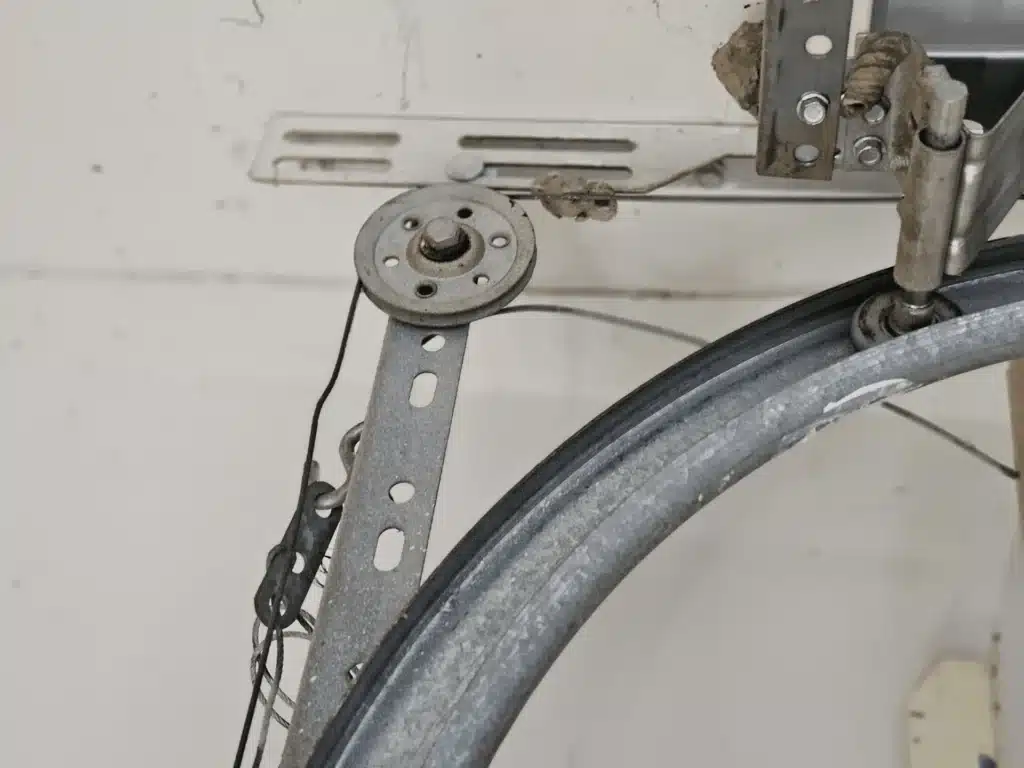
Do not loosen, remove or adjust garage door springs, lift cables, bottom brackets or cable drums. These components can be under significant tension.
If the door is crooked, has a loose cable, is off track or cannot secure the garage, consider emergency garage door repair in Houston rather than repeatedly operating the door.
For independent safety information, homeowners can also review the CPSC guidance for automatic residential garage door operators .
Mechanical Problems Can Make the Garage Door Opener Look Faulty
It is easy to assume every reversing problem originates inside the opener. However, the opener is only one part of the complete garage door system.
Garage Door Balance
Springs counterbalance much of the garage door's weight. If the spring system is no longer providing appropriate assistance, the opener can experience excessive load.
Rollers and Tracks
Worn rollers, bent track sections, loose hardware or alignment problems can cause binding. Resistance may become particularly noticeable near the bottom of travel.
Bottom Weather Seal
A damaged or folded bottom weather seal may contact the floor differently than expected. Uneven concrete can create a similar effect.
Hinges and Door Sections
Damaged hinges or panel alignment may change the geometry of the door as it approaches the closed position.
Periodic garage door maintenance in Houston can help identify worn rollers, balance problems, cable wear, hinge issues and alignment concerns before they develop into larger problems.
Why Houston Conditions Can Affect Garage Door Closing Behavior
The core causes of garage door reversal are similar throughout the country, but Houston's climate and housing conditions can influence how garage door components perform.
High heat, humidity, severe thunderstorms and periods of tropical weather are part of the broader Houston environment. Homeowners who want official local weather information can monitor the National Weather Service Houston/Galveston office .
Weather exposure can affect seals and exterior components, while frequent daily garage use creates additional cycles on springs, rollers, hinges and openers.
Homeowners around Uptown Houston and The Galleria , Tanglewood and River Oaks may have garage door systems ranging from older opener installations to newer smart garage door systems.
Homes needing garage door repair in Memorial Houston may similarly have combinations of existing tracks, springs, doors and newer opener equipment.
That is why diagnosis should consider both the opener and the mechanical door system instead of assuming one component is responsible.
Easy Garage Door Repair also provides garage door repair near Willowbend and Southwest Houston for homeowners in that part of the city.
Does a Reversing Garage Door Mean You Need a New Opener?
Not necessarily. A garage door that hits the floor and reverses may need adjustment, calibration or repair rather than a complete opener replacement.
Opener Repair May Make Sense When:
- The opener otherwise operates normally.
- The problem appears related to travel calibration.
- The door moves smoothly and remains balanced.
- The issue involves sensors or controls.
- The opener remains compatible with the existing door.
Replacement May Be Worth Comparing When:
- The opener has repeated motor or electrical failures.
- Important safety functions are unreliable.
- Major components are worn or unavailable.
- Repair cost approaches the cost of a suitable replacement.
- The homeowner wants modern smart-access features.
A proper diagnosis should come before replacement. Installing a new opener will not correct damaged tracks, rollers, cables or an unbalanced garage door.
If replacement is ultimately recommended, review your options for garage door opener repair and service before making the decision.
Questions to Ask Before Approving Garage Door Repair
- What is causing the garage door to reverse?
- Is the problem in the opener or the door itself?
- Did you inspect the close-travel setting?
- Did you inspect the rollers and tracks?
- Is the garage door properly balanced?
- Are the safety sensors functioning properly?
- Is the garage door safe to continue operating?
- What parts or adjustments are needed?
- What is included in the written estimate?
- Should repair or replacement be compared?
Red Flags When Diagnosing a Reversing Garage Door
- Recommending a complete garage door replacement without first checking the opener, travel settings, tracks and balance.
- Increasing opener force without explaining why the door is meeting resistance.
- Giving a vague quote without identifying the repair.
- Replacing parts without explaining why they failed.
- Ignoring a visibly uneven or heavy garage door.
- Failing to discuss safety when springs, cables or tracks are damaged.
- Pressuring the homeowner into unnecessary opener replacement.
Why Consider Easy Garage Door Repair?
Easy Garage Door Repair provides garage door services in Houston for homeowners dealing with opener problems, sensors, springs, rollers, tracks, cables and other residential garage door problems.
For a garage door that hits the floor and immediately reverses, a useful diagnostic visit should determine whether the problem comes from travel calibration, safety controls or mechanical resistance before recommending repairs.
Easy Garage Door Repair may be a strong local option for homeowners who need professional garage door troubleshooting in Houston.
Easy Garage Door Repair
5757 Woodway Dr Unit 301B
Houston, TX 77057
Phone:
(832) 570-3845
You can also view Easy Garage Door Repair on Google Maps .
Garage Door Repair Areas We Serve Around Houston
Easy Garage Door Repair serves homeowners across Houston and nearby communities for garage door repair, opener troubleshooting and other residential garage door services.
Frequently Asked Questions
Why does my garage door hit the floor and then go back up?
A common cause is a close-travel setting that tells the opener to move slightly farther downward than necessary. The door reaches the floor, resistance increases and the opener interprets that resistance as an obstruction. Binding rollers, an unbalanced door or excessive resistance at the bottom can create similar symptoms.
Can garage door sensors make the door close and reopen?
Yes. Misaligned, blocked or malfunctioning photo-eye sensors can cause a closing garage door to reverse. Sensor problems often cause the door to reverse before reaching the floor, while reversal after floor contact may point more strongly toward travel calibration or mechanical resistance.
Should I increase the garage door opener force?
Increasing force should not be the first response. Additional force can hide mechanical resistance caused by an unbalanced door, damaged rollers or track problems. The cause of the resistance should be identified first.
Can an uneven garage floor cause the garage door to reverse?
Yes. An uneven concrete surface or compressed bottom weather seal can change how the garage door contacts the floor. One part of the door may reach the ground before another, creating additional resistance during the final part of the closing cycle.
Can a broken garage door spring cause reversal?
A spring or balance problem can make the garage door unusually heavy and increase the load placed on the opener. Springs should not be adjusted or replaced by an untrained homeowner because they can store significant energy.
Why does my garage door reverse only sometimes?
Intermittent reversal can involve changing sensor alignment, a roller or track that binds at a certain position, weather-seal resistance or an opener calibration issue. Noting exactly where the reversal occurs can help narrow the diagnosis.
Who can diagnose a garage door that reverses in Houston?
A garage door technician can inspect the opener travel settings, photo-eye sensors, rollers, tracks, springs and door balance. Easy Garage Door Repair provides garage door opener repair in Houston for homeowners experiencing closing and reversal problems.
Do I need a new garage door opener if the door keeps reversing?
Not automatically. Many reversal problems involve calibration, sensors or mechanical resistance rather than total opener failure. A diagnosis should determine the cause before opener replacement is recommended.
Find Easy Garage Door Repair in Houston
Easy Garage Door Repair is located at 5757 Woodway Dr Unit 301B, Houston, TX 77057.
Garage Door Hits the Floor and Opens Again?
If your garage door will not stay closed, the problem may involve the opener travel settings, safety sensors or mechanical resistance. A proper inspection can identify the cause before unnecessary parts are replaced.
Call Easy Garage Door Repair at (832) 570-3845 for garage door troubleshooting and repair in Houston and nearby areas.
Related Garage Door Resources
Garage Door Opener Problems
Learn more about diagnosing and repairing opener problems that prevent normal garage door operation.
Garage Door Opener Repair →Garage Door Won't Close
Explore other common reasons a residential garage door may refuse to close or repeatedly reverse.
Why Your Garage Door Won't Close →Garage Door Sensor Problems
Learn how photo-eye alignment and sensor problems can interfere with garage door closing.
Garage Door Sensor Repair →Garage Door Maintenance
Routine inspection can help identify worn rollers, hinges, tracks, balance issues and other developing problems.
Garage Door Maintenance Houston →Emergency Garage Door Repair
Get information about urgent garage door problems including stuck, off-track and unsafe doors.
Emergency Garage Door Repair →All Garage Door Services
Explore repair, opener, spring, sensor, cable and other residential garage door services.
View Garage Door Services →